The end of March heralds the end of the old tax year and the imminent beginning of the new. Although much has changed at the Middle Temple over the centuries, the need for money and prudent financial management has always been of vital importance to the survival of the Society. The methods of managing the finances of the Inn have changed greatly since the creation of its earliest surviving records, though traces of these early processes survive in its modern administration.
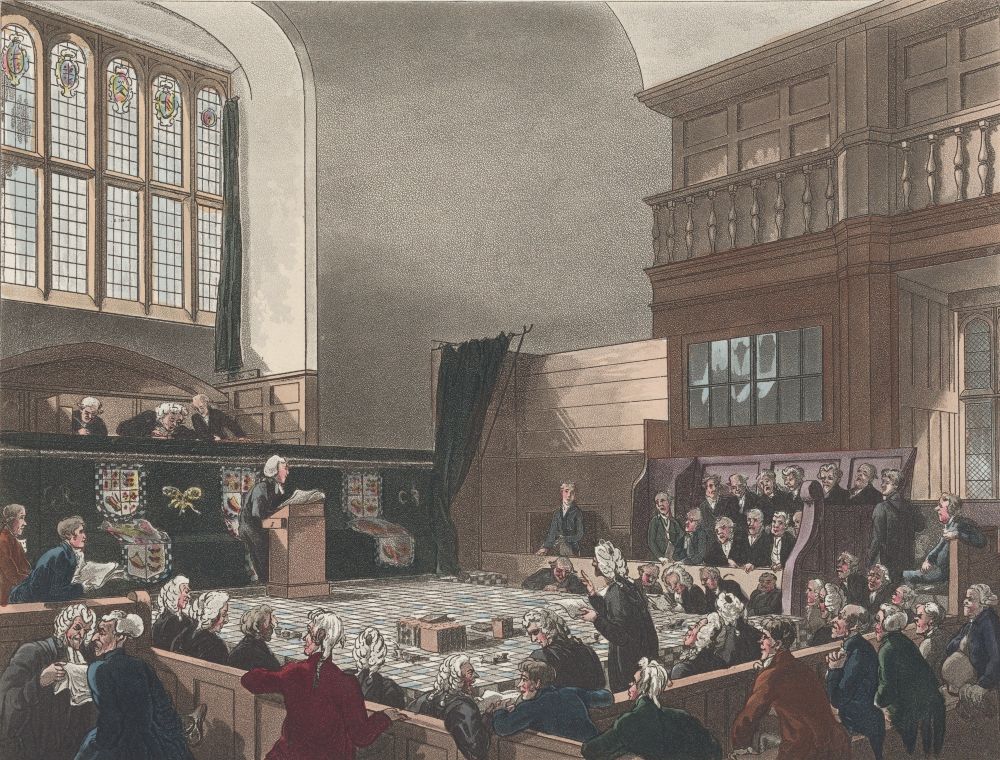
Print of the Court of Exchequer in Westminster Hall, early nineteenth century
The fact that the current tax year begins on 6 April can be confusing in a modern context as it does not coincide with the New Year in January or the traditional legal or academic year that begins in September. Prior to the change from the Julian to the Gregorian Calendar in England in 1752, the new year began at Lady Day, the Feast of the Annunciation, on 25 March. This means great care needs to be taken when examining archival records prior to 1752 that date to the earliest part of the year, as a record dated February 1601 would in fact have been created in what we would now call 1602. This has led to some confusion at the Middle Temple in the past - in 1951, the 350th anniversary of the first recorded performance of William Shakespeare’s ‘Twelfth Night’ was accidentally celebrated one year early on account of this easily made error. While long lost to popular memory, the anomalous start of the modern tax year in April is a hidden remnant of this older rhythm of life.
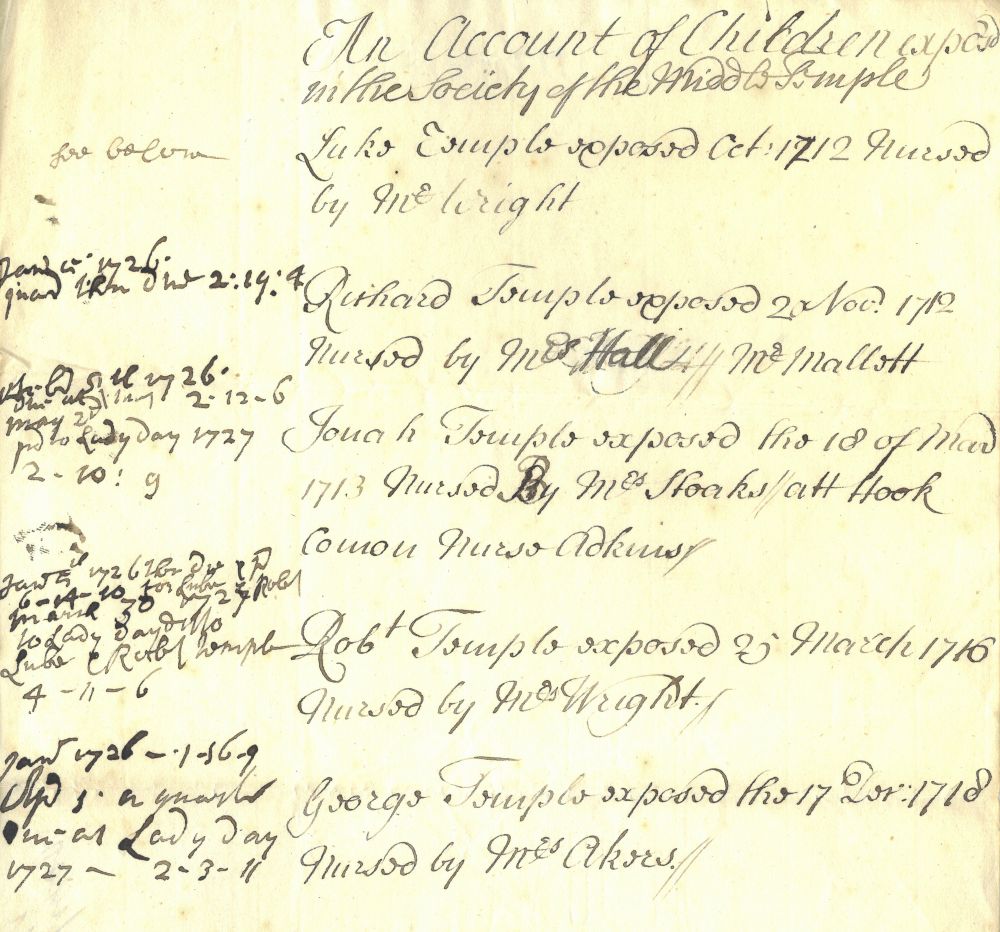
Account of children exposed in the Middle Temple with a record of sums of money paid and due for their maintenance at each Lady Day, 1727 (MT/18/FOU/4)
The earliest evidence in the historic collections of financial dealings at the Inn was discovered during an archaeological excavation. A small coin-like item called a jetton, dating from the fifteenth or sixteenth century, was donated in 1991 by Leslie Matthews, a member of the Inn. It was found in Pump Court, on what is thought to be the site of the old Hall. These counters were used for financial calculations on a counting board, known as an exchequer board, still referenced in the modern governmental title ‘Chancellor of the Exchequer’. Counters such as this would have been in use at in the Inn’s Treasury to calculate its income and expenses and were particularly useful for sums prior to the widespread use of Arabic numerals, which start appearing in the Inn’s financial records in the first decades of the seventeenth century.
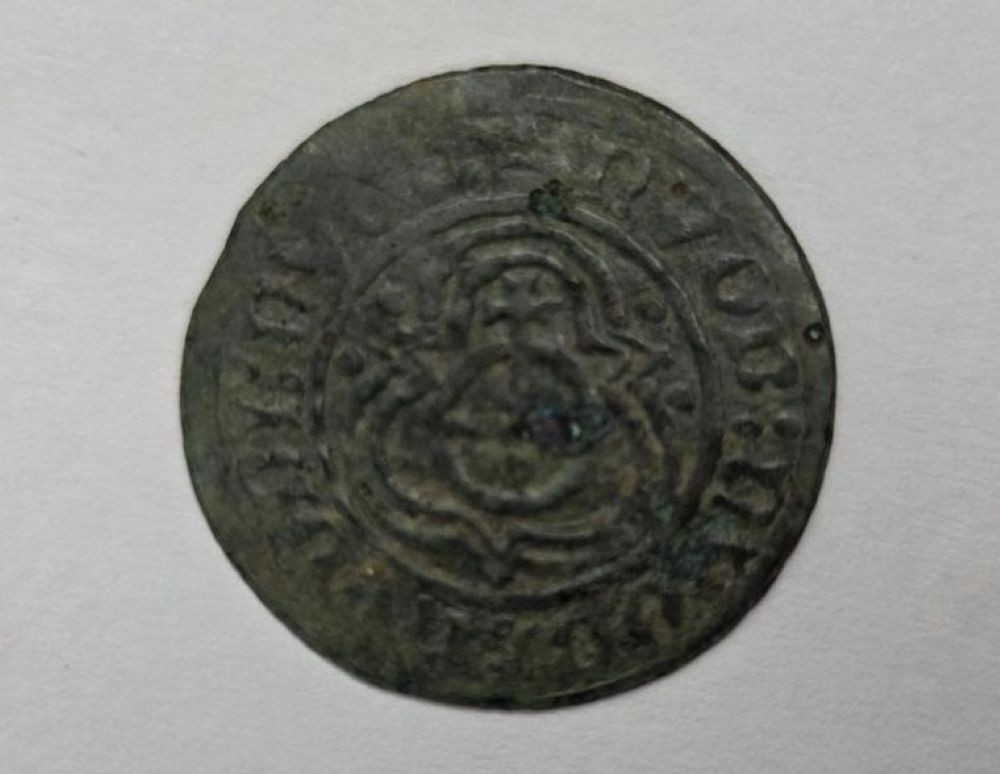
Nuremberg jetton discovered in Pump Court, fifteenth-sixteenth century
In the sixteenth century, the Treasurer of the Society was its chief financial officer. Prior to the mid-1500s, many routine chores around the Inns of Court were performed by members themselves rather than salaried servants. Records do not survive at the Middle Temple prior to 1501, but at Lincoln’s Inn the collection of members’ payments from 1422 onwards was done by a ‘pensioner’ or ‘collier’, assisted from 1455 by a ‘treasurer’, who supervised the Inn’s finances and later became its it formal head. Over the course of the sixteenth century there was a gradual reduction in the responsibilities of the member-officers, and a greater number of salaried servants employed. The first mention of an Under Treasurer in the Inn’s records appears on 7 July 1524, when ‘Master Whorwode was chosen by the Fellowship at the instance of the Treasurer, to collect and levy debts in place of the Treasurer, as an assistance to the Treasurer for the time being’. More of the Treasurer’s financial duties were transferred to the Under Treasurer over the century until 1625 when Treasurer Nicholas Hyde was relieved of ‘the trouble of receiving anye monies into his hands’.
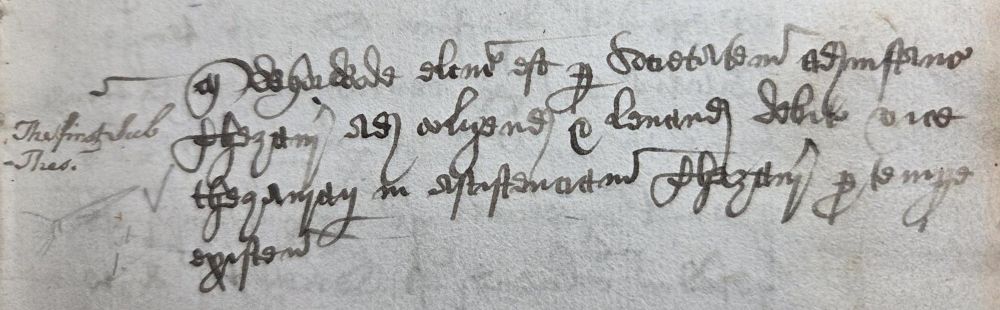
First appointment of an Under Treasurer at the Inn, 7 July 1524 (MT/1/MPA/1)
The Treasury of the early modern period did not just process financial transactions; it also secured the Inn’s treasures in the absence of banks. Money would have been securely locked up in an iron-bound chest, as was its collection of silver, which acted as both a store and a display of the Inn’s wealth. Records of the Middle Temple’s administration, bonds, deeds and legal cases were also kept there, with the Treasury acting as a repository for vital evidence of the Society’s financial, land and legal entitlements.
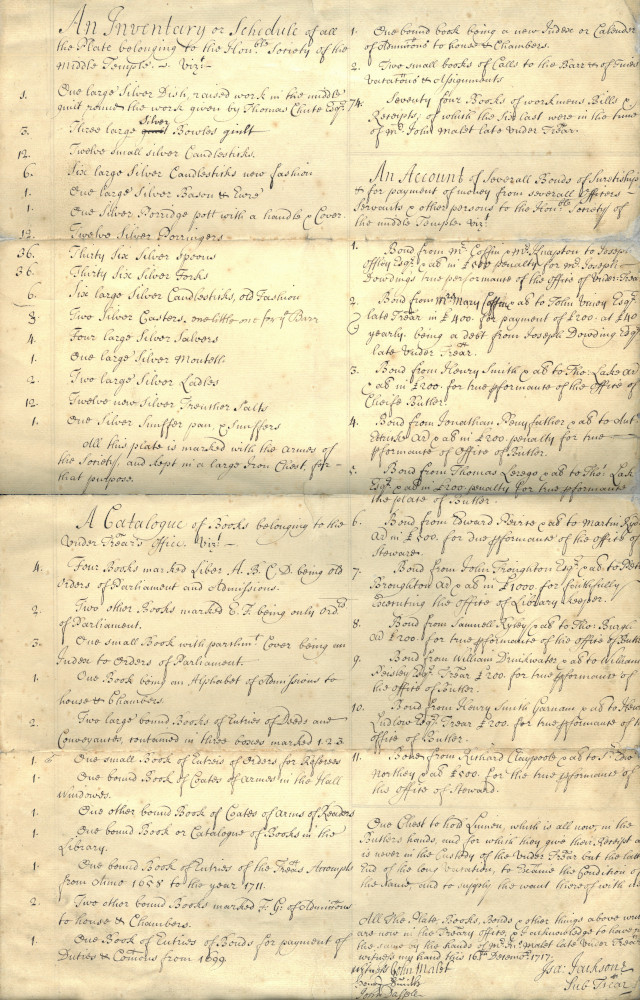
Inventory of plate, books, securities and other items held in the custody of Isaac Jackson, Under Treasurer, 16 December 1717 (MT/11/INP/1)
As well as being secured by lock and key, the steadfast guardianship of the Inn’s precious articles was ensured by the enforcement of steep penalties on the Under Treasurer if he was remiss in his duties. On first being employed in the role, he was required to provide a bond to the Society – this was required as a form of insurance, making the Under Treasurer personally responsible for any losses that occurred. The oldest surviving Under Treasurer’s bond in the archive originates from 1711 for John Malet, and required him to provide £1000 as security, an enormous sum at the time. The Treasury would continue in this role as a repository until the Inn’s Parliament ordered that it open its first bank account on 10 June 1785.
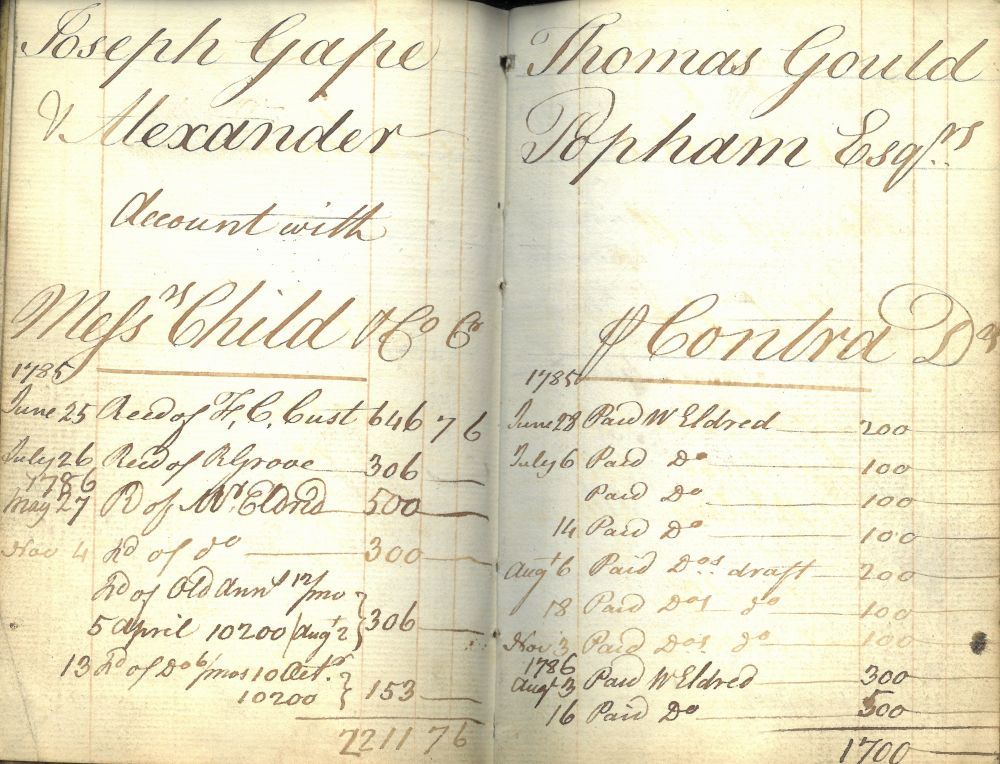
The Inn’s first banking passbook for an account with Child & Co., 1785-1818 (MT/2/BAP/1)
The earliest financial records that survive in the Inn’s Archive are individual bills relating to payments to servants, suppliers and workmen and these represent a record of the vital work that kept the Middle Temple functioning on a daily basis. From 1637 onwards, comprehensive receipt books survive in which the Inn regularly compiled its bills, a practice which continued until 1922. Every bill that the Inn was issued was copied down in one of these volumes, providing a comprehensive record for the year and ensuring that this vital information was not misplaced. One volume survives from 1614-1615 and it is unclear whether there were earlier books that were lost or destroyed, or whether this compilation was an anomaly at the time and undertaken by a particularly diligent Treasurer.
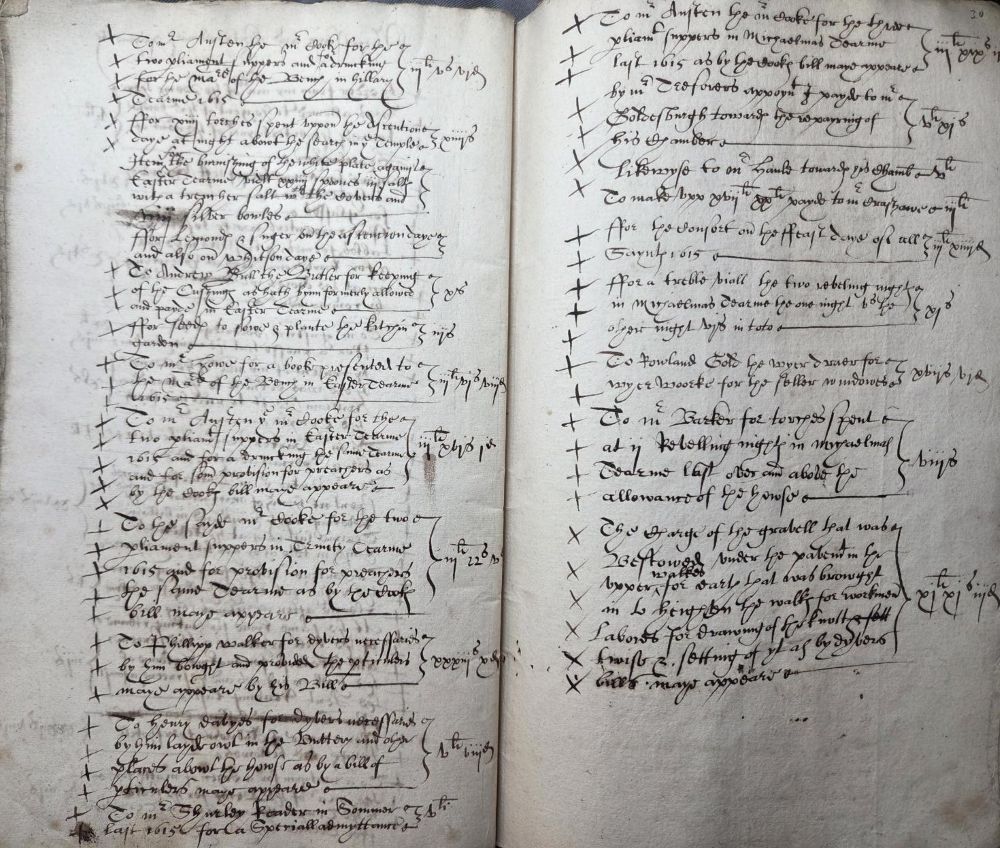
‘Necessary and Extraordinary Payments’ from the earliest surviving Treasurer’s Receipt Book, 1614-1615 (MT/2/TRB/1a)
While the Inn’s early financial records list its various streams of income and its expenses, over the course of the seventeenth century financial matters would be complicated by the imposition of taxes from central government. Prior to the second half of the seventeenth century, direct taxes were almost exclusively imposed in times of war and this is reflected in the archive’s first record of central government taxation. This was a receipt dated 24 August 1653 ‘for payment of the Parliaments Army in England, Ireland and Scotland, and the Navie’.
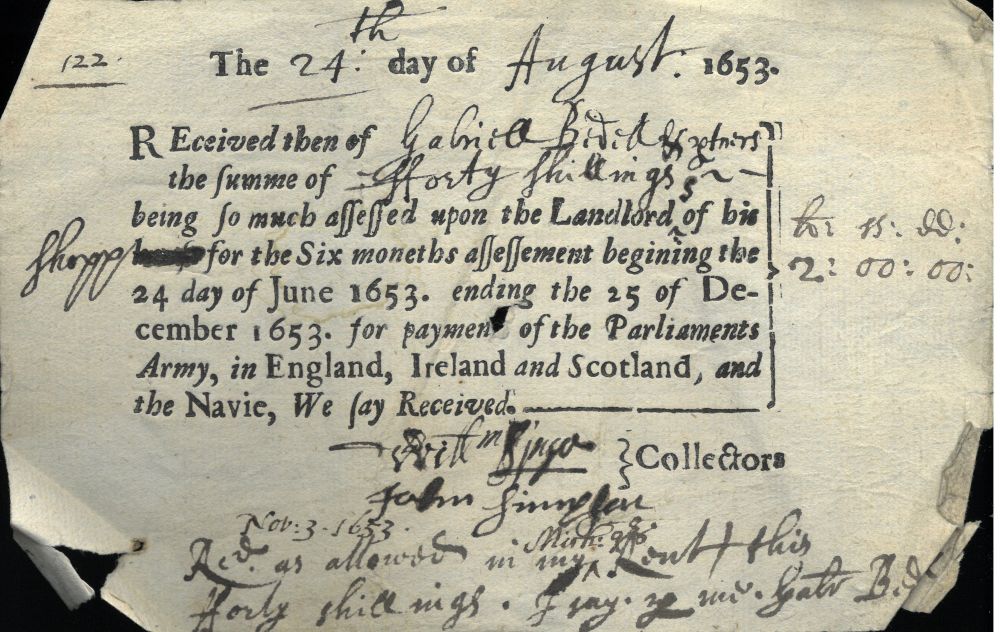
Tax receipt for taxes raised for Parliament’s army and navy, 24 August 1653 (MT/2/TUT/23)
After the Restoration of the Monarchy in 1660, funds were needed to finance the expenses of the Royal Household. With the country’s finances ruined by civil war, a rise in inflation, and the decline of the King’s traditional feudal revenues, Parliament agreed to allow a new tax to fund the Royal Household. This was the Hearth or Chimney Tax, which was a deeply regressive tax levied on the population twice yearly between 1662 and 1689. Households were charged a flat rate per hearth or fireplace they had, with some exceptions for the poorest in society. This was deeply unpopular and required the tax collectors to demand entry into private property to count hearths. It was replaced in England by less intrusive revenue sources but continued being imposed on Ireland until 1795. The Middle Temple still possesses assessments and receipts produced during this period of chimney taxation, including a roll produced in 1665 containing a list of all individuals dwelling in the Temple and recording sums paid by each.
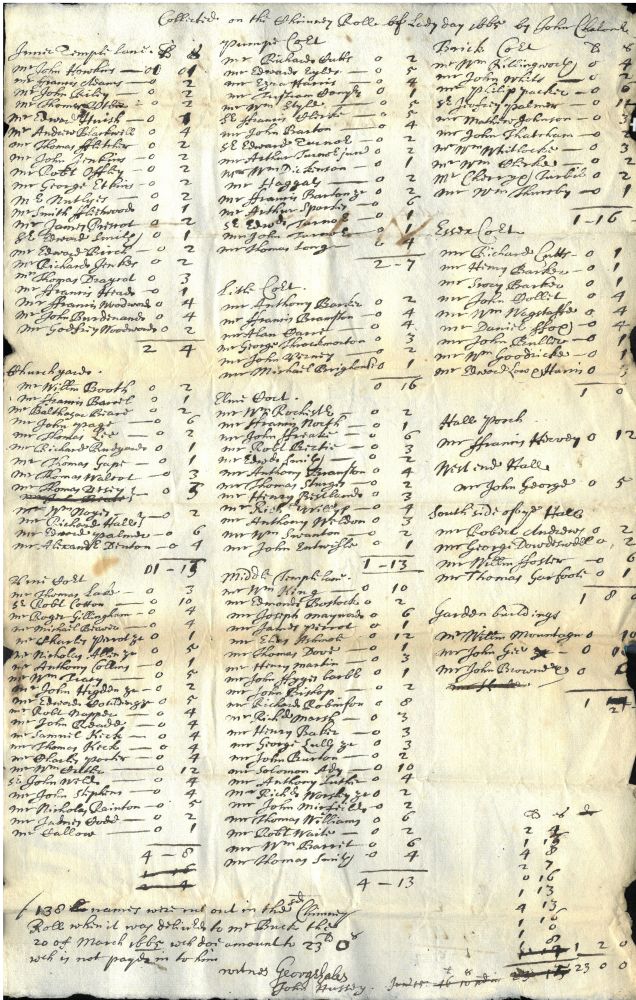
Record of money collected on the Chimney Roll by Lady Day 1665 (MT/2/TUT/27)
With the creation of the Bank of England in 1694 and increasingly sophisticated methods of government financing being created, more opportunities for the Inn to generate income arose. While the Inn’s Treasury was a securely guarded repository of its wealth, it offered no prospect of financial returns in the form of interest or investment. To begin to profit from its surpluses, the Society began its first foray into investing in the early eighteenth century and consequently got drawn into the infamous South Sea Bubble. This was a major financial crisis that came to a head in 1720, caused by a mania of speculation and investment in South Sea stock, initially used by the government to refinance the government debt. The share price soared from £128 in January 1720 to almost £1000 per share in August 1720 before dropping to £100 per share before the year was out, ruining countless investors. Fortunately, the Inn bought the stock in February 1719 and did not become drawn into the speculative frenzy at its zenith. The Society continued to hold South Sea stock until the nineteenth century and did not suffer materially from this early crash.
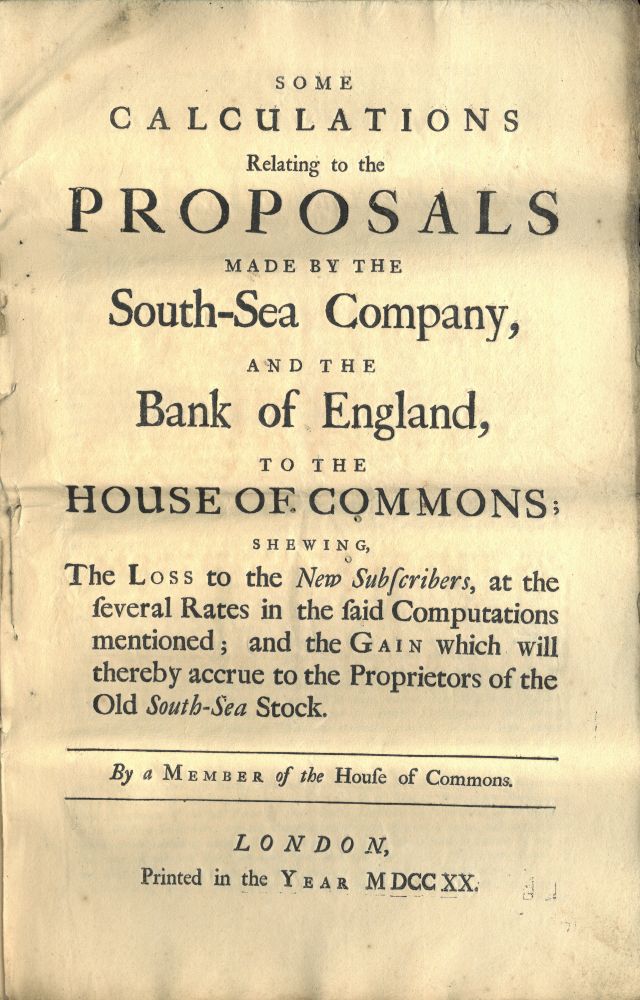
Calculations relating to the Proposals of the South Sea Company, 31 March 1720 (MT/1/MIS/15)
The administration of the Middle Temple finances has undergone a huge transformation since the early days of the Inn – from implementing financial recording and the use of banks, administering central government taxation, and making forays into investment. However, although the roles have changed, the positions of Treasurer and Under Treasurer remain, and the central hub of the Treasury continues to retain its importance in the management of the Inn’s affairs, quietly echoing the annual rhythms of past centuries.